What Is Soil Nailing and How Does a Soil Nail Wall Work?
Soil nailing is a ground-stabilization technique used to reinforce existing soil and support excavations or slopes. It works by installing closely spaced reinforcing elements, known as soil nails, into the ground so that the soil mass behaves as a stronger and more stable system.
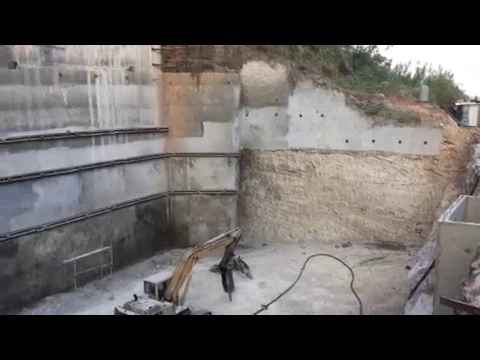
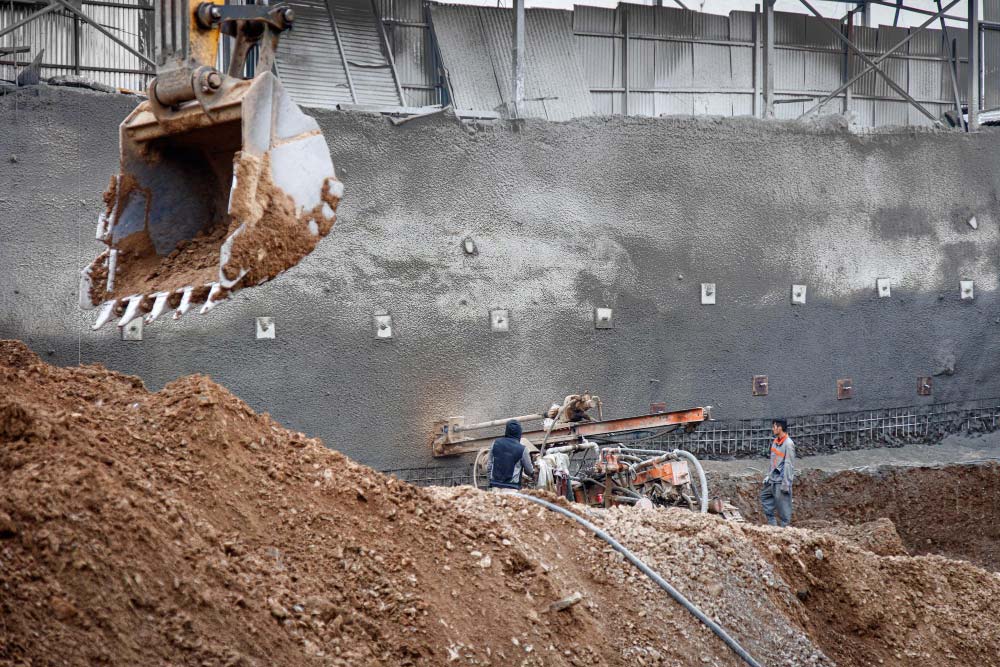
A soil nail wall is typically constructed progressively as excavation moves downward. After each excavation stage, soil nails are drilled and installed into the retained ground, and a reinforced facing, commonly shotcrete, is applied to the exposed soil surface.
For construction projects in Lebanon, soil nailing can be an effective solution where excavation support, slope stabilization or ground reinforcement is required, particularly on constrained sites where conventional retaining systems may be difficult to install.
At Albitar Foundations, soil nailing is considered as part of the wider ground-engineering strategy, taking into account soil conditions, excavation depth, groundwater, surrounding structures, access and construction sequence.
What Is Soil Nailing?
Soil nailing is a method of strengthening an existing soil mass by installing steel reinforcing elements into the ground, generally at a slight downward inclination.
The nails interact with the surrounding soil and help resist movement within the retained ground. As excavation progresses, the reinforced soil mass becomes more stable and capable of supporting a near-vertical or steeply inclined face.
Unlike some retaining systems that rely mainly on large structural elements, soil nailing works by reinforcing the ground itself.
What Is a Soil Nail Wall?
A soil nail wall is a reinforced-earth retaining system formed by combining soil nails with a protective wall facing.
The soil nails strengthen the retained ground, while the facing helps support the exposed surface between the nails and distributes local forces across the wall.
The facing often includes:
- Shotcrete
- Reinforcing mesh
- Steel reinforcement
- Bearing plates at nail heads
- Drainage elements where required
The exact wall arrangement depends on the project design, soil conditions, excavation depth and structural requirements.
How Does a Soil Nail Wall Work?
A soil nail wall works by creating a reinforced mass of soil behind the excavation face.
As the ground naturally tends to move toward the excavation, the soil nails develop resistance through interaction with the surrounding soil. This helps reduce deformation and improve overall stability.
The system relies on the combined behavior of:
- The existing soil
- The installed soil nails
- The facing system
- The connection between the nail heads and facing
Together, these elements create a stabilized zone capable of supporting the retained ground.
How Is a Soil Nail Wall Constructed?
Soil nail walls are generally constructed from the top downward in a series of controlled excavation stages.
A typical construction sequence may include:
- Excavating a limited depth of soil
- Preparing and cleaning the exposed excavation face
- Drilling holes into the retained ground
- Installing steel soil nails
- Grouting the nails where required by the design
- Installing reinforcement and nail-head connections
- Applying shotcrete to the exposed face
- Installing drainage measures where required
- Repeating the process as excavation progresses downward
This staged construction method allows the ground to be reinforced progressively rather than excavating the entire depth before installing support.
Why Is Soil Nailing Installed in Stages?
Progressive excavation is an important part of soil nail wall construction because the exposed soil face needs support as the excavation becomes deeper.
Instead of removing a large amount of soil at once, the excavation is advanced in controlled stages. After each stage, the exposed ground is reinforced before the next level is excavated.
This helps maintain stability throughout construction and allows the support system to develop progressively as the excavation continues.
When Is Soil Nailing Used?
Soil nailing can be considered when an excavation or slope requires additional reinforcement and the existing ground conditions are suitable for nail installation.
Common applications include:
- Deep excavation support
- Basement excavation
- Slope stabilization
- Road cuts
- Infrastructure projects
- Retaining wall construction
- Restricted urban sites
- Ground stabilization near existing structures
- Temporary excavation support
- Permanent retaining applications where designed accordingly
What Are the Main Advantages of Soil Nailing?
Soil nailing can offer several practical advantages where the site and ground conditions are suitable.
Potential advantages include:
- Progressive construction as excavation advances
- Relatively limited working space compared with some large retaining systems
- Ability to follow irregular excavation geometry
- Integration with shotcrete facing
- Use on slopes as well as excavation faces
- Compatibility with restricted urban construction sites
- Ability to reinforce the existing ground rather than replacing it
- Integration with wider shoring and excavation-support systems
What Types of Ground Are Suitable for Soil Nailing?
Soil nailing can be used in a range of ground conditions, but not every soil profile is equally suitable.
The ground must generally be able to remain sufficiently stable during the short period between excavation and installation of the nail-and-facing system.
Important ground factors include:
- Soil type and strength
- Soil cohesion
- Ground layering
- Presence of loose or unstable material
- Rock or hard layers
- Groundwater conditions
- Potential for erosion or ravelling
A geotechnical assessment is required to determine whether soil nailing is appropriate for a specific site.
How Does Groundwater Affect Soil Nail Walls?
Groundwater can significantly influence the performance and construction of a soil nail wall.
Water pressure, seepage or saturated soil can affect excavation stability and may reduce the ability of the exposed face to remain stable during construction.
For this reason, soil nail walls may require drainage and groundwater-management measures.
These may include:
- Drainage strips behind the facing
- Weep holes
- Surface drainage
- Groundwater monitoring
- Construction dewatering where required
Groundwater control should be considered together with soil nailing rather than as a separate issue.
What Is the Role of Shotcrete in a Soil Nail Wall?
Shotcrete is commonly used as the facing material on soil nail walls.
It is applied directly to the exposed ground surface and works together with reinforcement and nail-head connections to create a continuous protective facing.
The shotcrete facing helps:
- Support the exposed soil surface
- Distribute local forces between soil nails
- Reduce surface erosion
- Protect the reinforced soil mass
- Create a controlled retaining face
The thickness and reinforcement of the facing depend on the project design.
What Is the Difference Between Soil Nails and Ground Anchors?
Soil nails and ground anchors may look similar because both involve drilling steel elements into the ground, but they work differently.
Soil Nails
- Are generally passive reinforcing elements
- Reinforce the soil mass
- Are usually installed in relatively close spacing
- Develop resistance as the ground tends to move
- Are commonly used with shotcrete facing
Ground Anchors
- Are commonly actively stressed
- Apply restraint to a retaining structure
- Transfer tensile loads into suitable soil or rock
- Are often used with soldier pile walls or secant pile walls
The appropriate system depends on the engineering design, excavation depth, surrounding structures and ground conditions.
Soil Nailing vs Secant Pile Walls
Soil nail walls and secant pile walls can both support excavations, but they use very different structural concepts.
Soil Nail Walls
- Reinforce the existing soil mass
- Are generally installed progressively during excavation
- Use closely spaced nails and a facing system
- Can be efficient where the existing ground can stand temporarily during staged excavation
Secant Pile Walls
- Use overlapping bored piles
- Create a relatively continuous structural retaining wall
- Can provide greater stiffness
- Can help reduce groundwater inflow
- May be preferred near sensitive neighboring structures or in certain deep excavations
Neither system is automatically better. The choice depends on the project conditions.
Can Soil Nailing Be Used Near Existing Buildings?
Yes, soil nailing may be used near existing buildings where the ground conditions, excavation geometry and structural requirements allow it.
However, neighboring foundations must be carefully considered because soil nails extend behind the excavation face.
Important considerations include:
- Location of adjacent foundations
- Property boundaries
- Underground utilities
- Required nail length
- Allowable ground movement
- Groundwater
- Access for drilling equipment
In some urban sites, property boundaries may restrict where soil nails or anchors can extend, which can influence the choice of excavation-support system.
Can Soil Nailing Be Used for Slope Stabilization?
Yes. Soil nailing is widely used for slope stabilization where the objective is to reinforce an existing soil mass and reduce the risk of movement.
It can be applied to natural slopes, cut slopes and other ground faces where additional reinforcement is required.
The slope geometry, soil type, drainage conditions and potential failure surfaces all need to be considered before developing the stabilization system.
What Factors Determine Soil Nail Length and Spacing?
Soil nail length, inclination and spacing are determined by engineering design rather than by a standard arrangement that applies to every project.
The design may consider:
- Wall height
- Excavation depth
- Soil strength
- Ground layers
- External loads
- Nearby structures
- Groundwater
- Potential failure surfaces
- Required safety factors
These factors determine how the reinforced soil mass needs to behave under expected site conditions.
Soil Nail Walls and Ground Stabilization in Lebanon
Construction sites in Lebanon can involve steep terrain, dense urban development, restricted access and variable soil and rock conditions.
These conditions can make soil nailing and ground stabilization valuable options for projects where excavation faces or slopes need additional reinforcement.
Albitar Foundations provides soil nail wall and ground-stabilization services in Lebanon as part of its specialist geotechnical and excavation-support capabilities.
Depending on project requirements, soil nailing can be coordinated with shotcrete, ground anchors, shoring, excavation and construction dewatering.
What Should Be Considered Before Choosing Soil Nailing?
Soil nailing should be selected based on site-specific engineering rather than simply because it has been used successfully on another project.
Key considerations include:
- Geotechnical investigation results
- Excavation height and geometry
- Soil strength and layering
- Groundwater conditions
- Distance to neighboring buildings
- Property boundaries
- Location of utilities
- Drilling access
- Required wall movement limits
- Temporary or permanent design requirements
Frequently Asked Questions About Soil Nailing
What is soil nailing in construction?
Soil nailing is a ground-reinforcement method that uses closely spaced steel elements installed into the existing soil to improve stability. The nails are typically combined with a reinforced facing such as shotcrete to create a soil nail wall.
How does a soil nail wall support an excavation?
The soil nails reinforce the retained ground and develop resistance as the soil tends to move. Together with the wall facing, they create a strengthened soil mass that helps support the excavation face.
Is soil nailing suitable for deep excavations?
Soil nailing can be used for significant excavation depths where ground conditions and project geometry are suitable. The allowable depth depends on engineering design, soil conditions, groundwater, neighboring structures and construction constraints.
Can soil nail walls be permanent?
Yes. Soil nail walls can be designed for temporary or permanent applications. Permanent systems require appropriate design considerations for reinforcement, corrosion protection, drainage, facing and long-term performance.
Does Albitar Foundations provide soil nailing services in Lebanon?
Yes. Albitar Foundations provides soil nailing and ground-stabilization services in Lebanon for excavation support, slope stabilization and other specialist ground-engineering applications. These systems can be coordinated with shotcrete, anchors, shoring and dewatering according to project requirements.
Is Soil Nailing the Right Solution for Your Excavation?
Soil nailing can be a highly practical excavation-support and ground-stabilization method when the soil can be reinforced progressively and the site provides suitable drilling access.
It is often a strong option for constrained excavations, slopes and sites where a reinforced-earth solution can respond effectively to the existing ground conditions.
However, successful soil nailing depends on proper understanding of the soil profile, groundwater, excavation geometry, neighboring structures and construction sequence.
Planning a Soil Nail Wall or Ground-Stabilization Project in Lebanon?
Early assessment can help determine whether soil nailing, ground anchors, secant piles or another excavation-support system is most appropriate for the site.
Contact Albitar Foundations to discuss soil nail walls, ground stabilization, shotcrete and specialist excavation-support solutions for your project in Lebanon.