What Are Micropiles and When Should They Be Used?
Micropiles are small-diameter deep foundation elements used to transfer structural loads to deeper, more competent soil or rock. They are especially useful where conventional piling equipment cannot operate easily because of restricted access, low headroom, nearby structures or sensitive site conditions.
Micropiles can be used for new foundations, foundation strengthening, underpinning and rehabilitation of existing structures. Their compact installation equipment and flexible construction methods make them particularly valuable on complex sites where larger bored piles or driven piles may not be practical.
For construction projects in Lebanon, micropiles can provide an effective foundation solution where existing buildings need strengthening, weak soils are present, access is limited or nearby excavation changes the support conditions around an existing structure.
Albitar Foundations provides micropile and underpinning works as part of its specialist ground-engineering and foundation services, with solutions adapted to the structural requirements, ground conditions, access limitations and construction sequence of each project.
What Is a Micropile?
A micropile is a relatively small-diameter deep foundation element installed by drilling into the ground. A steel reinforcement element is placed within the drilled hole, and grout is typically introduced to form the pile and transfer loads into the surrounding soil or rock.
Micropiles can carry significant axial loads despite their small diameter because their performance depends heavily on the interaction between the grout and the surrounding ground, as well as the steel reinforcement contained within the pile.
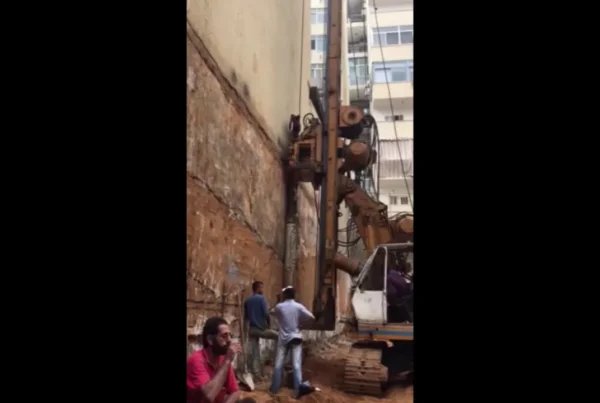
Unlike large-diameter bored piles, micropiles can often be installed using compact drilling equipment, making them suitable for confined or difficult-to-access construction areas.
How Do Micropiles Work?
Micropiles transfer structural loads from the foundation into deeper and more suitable ground.
The load is carried through the steel reinforcement and grout and transferred into the surrounding soil or rock along the bonded length of the micropile.
A typical micropile system may include:
- A drilled borehole
- Steel bar, casing or other structural reinforcement
- Cement grout
- A bonded zone within suitable soil or rock
- A connection to the existing or new foundation
The exact micropile configuration depends on structural loads, soil and rock conditions, groundwater, available working space and project specifications.
When Should Micropiles Be Used?
Micropiles are often selected when a project requires deep foundation support but the site makes conventional piling difficult or impractical.
Micropiles may be appropriate when:
- Existing foundations need strengthening
- A building requires underpinning
- Near-surface soils are weak or compressible
- Structural loads have increased
- Foundation settlement has occurred
- Construction access is restricted
- Low-headroom drilling is required
- Nearby excavation affects existing foundations
- Large drilling rigs cannot access the site
- Ground conditions are difficult or variable
- Vibration needs to be limited near sensitive structures
- Foundation rehabilitation is required
Why Are Micropiles Useful for Underpinning?
Underpinning is the process of strengthening or extending the support of an existing foundation.
Micropiles are particularly well suited to underpinning because they can be installed beside, beneath or through existing foundation elements using relatively compact drilling equipment.
Once installed and connected to the existing foundation, micropiles can transfer structural loads to deeper ground that provides more suitable support.
Underpinning may be considered when:
- An existing structure has experienced settlement
- The original foundation is no longer adequate
- Weak soils are present beneath the building
- Additional floors or structural loads are planned
- Nearby excavation changes ground-support conditions
- The building is being renovated or structurally modified
Can Micropiles Be Installed in Restricted-Access Areas?
Yes. Restricted access is one of the main reasons micropiles are used.
Micropile drilling rigs can be considerably smaller than equipment used for large bored piles. This can allow foundation work to be carried out in basements, inside existing buildings, between closely spaced structures or on sites with narrow access.
Typical restricted-access applications include:
- Basements
- Existing buildings
- Industrial facilities
- Confined urban sites
- Sites surrounded by neighboring structures
- Locations with restricted equipment access
What Is Low-Headroom Micropiling?
Low-headroom micropiling refers to micropile installation where vertical working space is limited.
This can occur inside existing buildings, beneath structural slabs, in basements or below overhead obstructions where conventional piling rigs cannot operate.
Compact or specially configured drilling equipment can be used to carry out the work in these constrained environments, subject to the actual project conditions and required pile depth.
Can Micropiles Be Used for New Buildings?
Yes. Although micropiles are widely associated with underpinning and foundation repair, they can also be used as deep foundation elements for new structures.
They may be selected where conventional pile installation is difficult because of restricted access, challenging ground conditions, existing nearby structures or specific structural requirements.
The suitability of micropiles for a new building depends on the required loads, pile layout, soil and rock conditions and the overall foundation design.
What Ground Conditions Are Suitable for Micropiles?
Micropiles can be installed through a wide range of soil and rock conditions because drilling methods can be adapted to different subsurface profiles.
Potential conditions may include:
- Fill material
- Weak soils
- Loose or variable ground
- Clay
- Sand and gravel
- Weathered formations
- Rock
- Mixed soil and rock profiles
The drilling method, casing requirements, grout procedure and micropile depth should be selected according to the actual geotechnical conditions encountered on site.
How Are Micropiles Installed?
Micropile construction generally involves drilling a relatively small-diameter borehole to the required depth, installing structural reinforcement and grouting the pile.
A typical installation sequence may include:
- Setting out the micropile position
- Preparing access for drilling equipment
- Drilling through soil or rock to the required depth
- Using casing where ground conditions require support
- Installing steel reinforcement
- Grouting the micropile
- Allowing the grout to develop the required strength
- Connecting the micropile to the foundation or structural element
- Testing where required by the project specifications
The actual construction method varies depending on the micropile system, site constraints and engineering design.
What Is the Difference Between Micropiles and Traditional Piles?
Micropiles and traditional deep foundation piles perform the same basic function: transferring loads into deeper ground. However, their size, installation equipment and typical applications can differ significantly.
Micropiles
- Use relatively small-diameter drilled elements
- Can often be installed with compact equipment
- Are suitable for restricted-access sites
- Can be installed in low-headroom conditions
- Are commonly used for underpinning and strengthening
- Can be drilled through difficult or variable ground
Traditional Large-Diameter Piles
- Generally use larger pile diameters
- Often require larger drilling equipment
- Can support very high structural loads
- Are commonly used for major new foundations
- Usually require greater working space and access
The correct choice depends on structural loads, site access, ground conditions, construction sequence and project requirements.
Micropiles vs Drilled Shafts
Drilled shafts are typically much larger in diameter than micropiles and are designed to carry substantial structural loads through a single large foundation element.
Micropiles, by comparison, are smaller and can often be installed in locations that cannot accommodate a large drilling rig.
For a large open construction site with heavy structural loads, drilled shafts may be more suitable. For foundation strengthening inside an existing building or on a restricted site, micropiles may provide a more practical solution.
Micropiles vs Underpinning: What Is the Difference?
Micropiles are a type of foundation element, while underpinning describes the broader process of strengthening an existing foundation.
Micropiles are one of several methods that can be used as part of an underpinning system.
For example, new micropiles may be installed beside an existing footing and connected to it so that structural loads are transferred from the original foundation into deeper ground.
Can Micropiles Help With Foundation Settlement?
Micropiles can be used as part of a foundation-strengthening solution where settlement has occurred or where the existing foundation needs additional support.
However, settlement can result from many different causes, including weak soils, changes in groundwater, increased structural loading, nearby excavation or changes to the building itself.
The cause of the movement should therefore be investigated before selecting the appropriate repair method.
Potential settlement-related applications include:
- Strengthening settled foundations
- Supporting structural rehabilitation
- Transferring loads below weak near-surface soil
- Supporting structures affected by nearby excavation
- Reinforcing foundations before structural modifications
Can Micropiles Be Used Near Existing Buildings?
Yes. Micropiles are commonly used on projects where new foundation works need to be carried out close to existing structures.
The relatively compact drilling equipment and controlled installation method can make them suitable for sensitive urban environments.
However, the design still needs to consider nearby foundations, underground services, access limitations and potential interaction between new and existing structures.
Do Micropiles Cause Vibration?
Micropiles are installed by drilling rather than by heavy impact driving, so installation can generally produce less vibration than driven piling methods.
This can be an important consideration near existing buildings, sensitive structures or occupied facilities.
Actual construction effects depend on the drilling equipment, ground conditions and installation procedure used on the project.
How Does Groundwater Affect Micropile Installation?
Groundwater can influence drilling stability, borehole support, casing requirements and grouting operations.
The installation method needs to respond to the soil profile and water conditions encountered during drilling.
Groundwater-related considerations may include:
- Borehole stability
- Need for temporary or permanent casing
- Water inflow during drilling
- Grouting procedure
- Interaction with nearby excavation works
- Construction dewatering requirements
Can Micropiles Be Installed Through Existing Foundations?
In some underpinning and strengthening projects, micropiles can be arranged through or immediately adjacent to existing foundation elements.
The connection between the micropile and existing structure must be carefully designed so that structural loads can be transferred effectively.
The final arrangement depends on the existing footing geometry, reinforcement, available drilling access and structural requirements.
Are Micropiles Tested?
Micropiles may be subject to load testing where required by the project specifications or engineering design.
Testing helps assess how the installed foundation element responds under controlled loading.
Depending on project requirements, testing may evaluate:
- Compression performance
- Tension or uplift performance
- Movement under load
- Overall pile behavior
The type and extent of testing depend on the foundation design, structural requirements and project specifications.
What Are the Main Advantages of Micropiles?
Micropiles are valued primarily for their flexibility and ability to solve foundation problems on difficult sites.
Key advantages may include:
- Installation in restricted-access areas
- Operation under low-headroom conditions
- Use for new or existing structures
- Suitability for underpinning
- Ability to drill through variable soil and rock
- Relatively compact equipment requirements
- Reduced vibration compared with some driven systems
- Integration with existing foundation systems
- Use for structural strengthening and rehabilitation
What Should Be Considered Before Choosing Micropiles?
Micropiles should be selected based on the complete foundation and site condition rather than simply because access is limited.
Important factors include:
- Structural loads
- Existing foundation condition
- Soil and rock profile
- Groundwater conditions
- Required pile depth
- Available headroom
- Equipment access
- Neighboring structures
- Underground utilities
- Construction sequence
- Testing requirements
Micropiles and Underpinning in Lebanon
Foundation projects in Lebanon can involve existing urban buildings, restricted construction access, variable ground conditions and neighboring structures located close to the work area.
These conditions can make micropiles particularly useful for foundation rehabilitation and underpinning projects where conventional piling equipment is too large or where construction must take place within an existing structure.
Albitar Foundations provides micropile and underpinning services in Lebanon for projects involving weak ground, foundation settlement, structural strengthening, restricted access and other complex foundation conditions.
Micropile works can also be coordinated with excavation, shoring, dewatering and other specialist below-ground construction activities according to project requirements.
Frequently Asked Questions About Micropiles
What are micropiles used for?
Micropiles are used to transfer structural loads to deeper soil or rock. Common applications include underpinning, foundation strengthening, new deep foundations, settlement-related rehabilitation and construction in restricted-access areas.
When should micropiles be used instead of conventional piles?
Micropiles may be preferred where site access is limited, working height is restricted, nearby structures are sensitive, ground conditions are difficult or the project involves strengthening an existing foundation. The final choice should be based on engineering and geotechnical requirements.
Can micropiles be installed inside an existing building?
Yes. Compact drilling equipment can often install micropiles inside basements or existing buildings where conventional piling rigs cannot operate. Actual feasibility depends on access, headroom, structural conditions and the required micropile depth.
Are micropiles suitable for underpinning?
Yes. Micropiles are widely used in underpinning because they can transfer loads from an existing foundation to deeper and more competent ground while being installed with relatively compact equipment.
Does Albitar Foundations provide micropile and underpinning services in Lebanon?
Yes. Albitar Foundations provides micropile, underpinning and foundation-strengthening services in Lebanon for existing and new structures, including projects with weak soils, settlement, restricted access and challenging ground conditions.
Are Micropiles the Right Foundation Solution for Your Project?
Micropiles can be an effective foundation solution where conventional piling is difficult, existing foundations require strengthening or site constraints demand compact drilling equipment.
They are particularly valuable for underpinning, rehabilitation, restricted-access construction and projects where structural loads must be transferred beyond weak near-surface soils.
However, the correct foundation solution depends on the structure, ground conditions, groundwater, loading requirements and construction constraints of the specific project.
Planning a Micropile or Underpinning Project in Lebanon?
Early evaluation of the existing foundation, soil and rock conditions, structural loads and drilling access can help determine whether micropiles are the appropriate solution.
Contact Albitar Foundations to discuss micropiles, underpinning, foundation strengthening and specialist ground-engineering solutions for your project in Lebanon.