What Are Drilled Shafts and How Do They Support Heavy Structures?
Drilled shafts are large-diameter deep foundation elements used to transfer heavy structural loads from buildings, bridges, infrastructure and other major structures into stronger soil or rock located deeper below the ground surface.
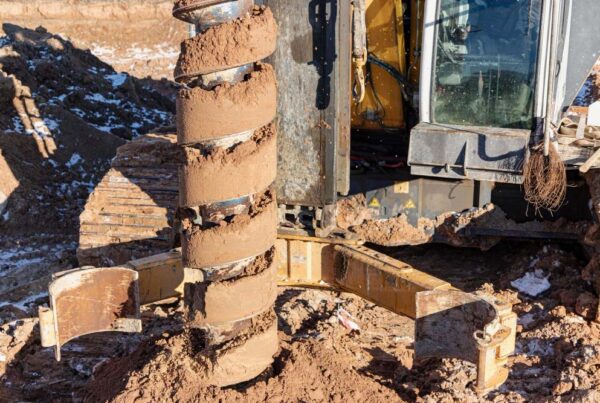
They are constructed by drilling a deep cylindrical excavation, placing reinforcement where required, and filling the shaft with concrete. Because drilled shafts can extend through weak near-surface soils and reach more competent bearing layers, they are commonly selected for structures carrying substantial vertical, lateral or uplift loads.
For construction projects in Lebanon, drilled shafts can be particularly useful where heavy structural loads, variable soil and rock conditions, groundwater or deep competent layers make shallow foundations unsuitable.
Albitar Foundations provides drilled shaft and deep foundation works as part of its specialist geotechnical and foundation capabilities, with construction methods selected according to ground conditions, foundation depth, groundwater, structural requirements and available site access.
What Is a Drilled Shaft?
A drilled shaft is a deep foundation element formed by drilling a large-diameter hole into the ground and filling it with reinforced or unreinforced concrete according to the structural design.
The shaft extends below weak or unsuitable near-surface soils and transfers structural loads into deeper soil or rock capable of providing the required foundation resistance.
Drilled shafts are also commonly referred to as bored piles in many construction markets, although terminology can vary depending on region, diameter and project specifications.
How Do Drilled Shafts Support Heavy Structures?
Drilled shafts support structures by transferring loads from the building or infrastructure element into deeper ground.
Foundation resistance can develop through a combination of:
- End bearing at the base of the shaft
- Skin friction or side resistance along the shaft
- A combination of base resistance and side resistance
The exact load-transfer mechanism depends on the soil and rock profile, shaft dimensions, construction method and structural design.
By extending the foundation to stronger ground, drilled shafts can support loads that may be too large for conventional shallow footings.
Why Are Drilled Shafts Used for Heavy Structures?
Heavy structures can impose significant loads on the ground. If the upper soil layers are weak, compressible or inconsistent, shallow foundations may experience excessive settlement or may not provide sufficient bearing capacity.
Drilled shafts allow these loads to be transferred deeper into more competent material.
They may be used where:
- Structural loads are very high
- Weak soils exist near the surface
- Competent soil or rock lies at greater depth
- Settlement needs to be controlled
- Foundations must resist lateral forces
- Uplift resistance is required
- Groundwater complicates shallow foundation construction
- Large foundation elements are required for major structures
What Types of Structures Use Drilled Shafts?
Drilled shafts are used for a wide range of structures where foundation loads or site conditions require deep support.
Common applications include:
- High-rise and multi-storey buildings
- Heavy commercial developments
- Bridges
- Infrastructure projects
- Retaining structures
- Industrial facilities
- Large public buildings
- Structures constructed on weak or variable ground
The decision to use drilled shafts depends on both the structural loads and the subsurface conditions identified during geotechnical investigation.
How Are Drilled Shafts Constructed?
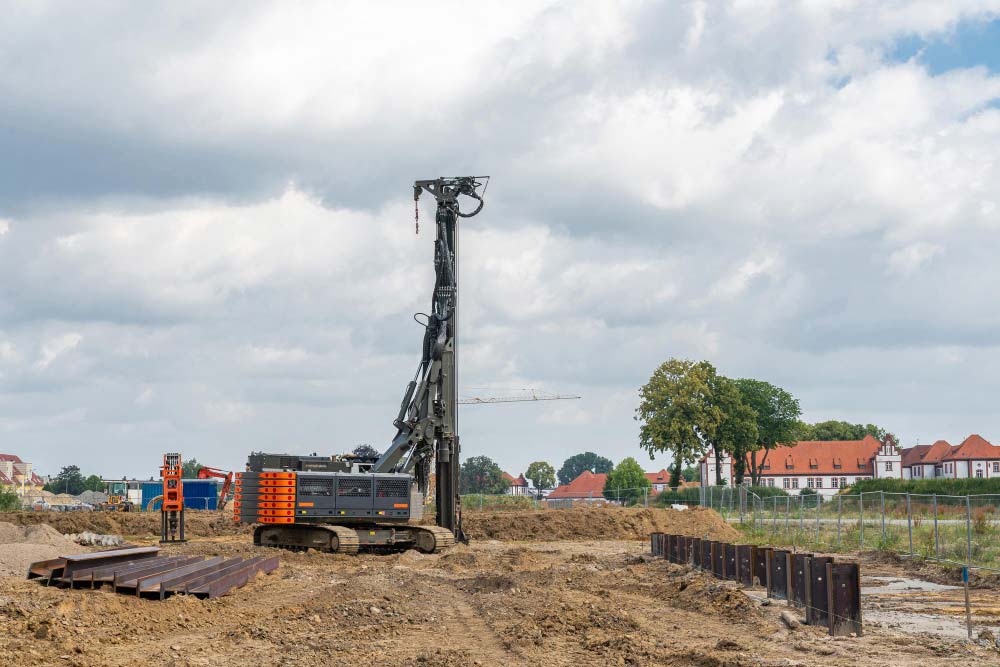
Drilled shaft construction generally begins by positioning drilling equipment at the planned foundation location and advancing a borehole to the required depth.
A typical sequence may include:
- Setting out the shaft location
- Preparing a stable drilling platform
- Drilling the shaft to the required diameter and depth
- Supporting the excavation where required
- Managing groundwater or unstable ground conditions
- Cleaning the base of the shaft
- Installing the reinforcement cage
- Placing concrete
- Completing testing or verification where required
The exact construction procedure depends on soil conditions, rock, groundwater, shaft dimensions, drilling equipment and project specifications.
What Is a Cased Drilled Shaft?
A cased drilled shaft uses steel casing to support the sides of the borehole during drilling and concrete placement.
Casing can be particularly useful where loose soils, unstable ground or groundwater make it difficult for the drilled excavation to remain open.
Depending on the project, casing may be temporary and withdrawn during concreting or may remain as part of the foundation system where specified.
What Is Segmental Casing?
Segmental casing uses sections of steel casing that are progressively advanced as drilling proceeds.
This method can provide borehole support through difficult or unstable soil layers and can be useful where excavation conditions change with depth.
The casing strategy should be selected according to the soil profile, groundwater and construction requirements of the drilled shaft.
What Is Slurry-Supported Drilling?
Slurry-supported drilling is another method used to maintain borehole stability during drilled shaft construction.
A suitable support fluid is introduced into the excavation to help stabilize the sides of the borehole while drilling continues.
This method may be considered where ground conditions or groundwater make an unsupported borehole impractical.
The choice between casing, slurry-supported drilling or another method depends on site-specific conditions and engineering requirements.
What Is the Difference Between Drilled Shafts and Bored Piles?
The terms drilled shaft and bored pile are often used to describe similar deep foundation systems constructed by drilling rather than driving.
In general, both involve:
- Drilling an excavation into the ground
- Installing reinforcement where required
- Placing concrete to form the foundation element
The terminology can vary by region, project type and foundation diameter. What matters most is the actual foundation design, dimensions, load requirements and construction method.
Drilled Shafts vs Driven Piles
Drilled shafts and driven piles are both deep foundation systems, but they are installed differently.
Drilled Shafts
- Are constructed by drilling
- Can use relatively large diameters
- Can extend into soil or rock
- Produce less impact vibration than pile driving
- Can be adapted to different shaft depths and diameters
Driven Piles
- Are prefabricated elements driven into the ground
- May be steel, concrete or other structural materials
- Use impact or vibration-based installation methods
- Can be efficient for suitable ground and site conditions
The appropriate system depends on structural loads, geology, groundwater, access, vibration restrictions and project requirements.
Drilled Shafts vs Micropiles
Drilled shafts and micropiles both transfer structural loads into deeper ground, but they differ significantly in size, installation equipment and typical applications.
Drilled Shafts
- Typically have larger diameters
- Can carry substantial structural loads
- Usually require larger drilling equipment
- Are well suited to major new structures
Micropiles
- Use relatively small diameters
- Can be installed using compact drilling equipment
- Are useful for restricted-access sites
- Are commonly used for underpinning and foundation strengthening
The choice depends on available space, required load capacity, ground conditions and the type of structure being supported.
How Deep Can Drilled Shafts Go?
There is no single standard depth for drilled shafts.
The required depth is determined by the ground profile and structural requirements of the project.
Depth may depend on:
- Location of competent soil or rock
- Required foundation capacity
- Structural loads
- Settlement criteria
- Groundwater conditions
- Shaft diameter
- Construction equipment capability
Some projects may achieve sufficient capacity within dense soil, while others may require shafts to extend into or socket into rock.
What Is a Rock Socket?
A rock socket is the portion of a drilled shaft that extends into competent rock.
The shaft may develop significant resistance through interaction between the concrete foundation element and the surrounding rock.
The required socket depth depends on rock quality, structural load, shaft diameter and engineering design.
Rock drilling therefore requires suitable equipment and an understanding of the geological conditions encountered at foundation level.
How Does Groundwater Affect Drilled Shaft Construction?
Groundwater can have a major influence on deep foundation construction.
Water entering the borehole may affect excavation stability, drilling conditions and concrete placement if it is not appropriately managed.
Potential groundwater considerations include:
- Borehole stability
- Need for casing
- Use of slurry-supported drilling
- Water inflow into the shaft
- Concrete placement procedures
- Interaction with construction dewatering
The construction method should therefore be selected with both the geological and groundwater conditions in mind.
Why Is Reinforcement Used in Drilled Shafts?
Reinforcement cages are commonly installed inside drilled shafts to provide the structural strength required by the foundation design.
The reinforcement helps the shaft resist combinations of:
- Compression
- Tension
- Bending
- Lateral forces
The size and arrangement of the reinforcement cage depend on structural loads, shaft dimensions and project requirements.
How Do Drilled Shafts Resist Lateral Loads?
Heavy structures do not always apply only vertical loads. Wind, earth pressure, structural forces and infrastructure loading can create significant horizontal forces.
Drilled shafts can resist lateral loading through interaction between the shaft and surrounding ground.
The shaft diameter, stiffness, embedment depth and soil or rock properties all influence lateral performance.
This capability makes drilled shafts suitable for many infrastructure and heavy structural applications where both vertical and horizontal resistance are important.
Can Drilled Shafts Resist Uplift?
Yes. Drilled shafts can be designed to resist uplift forces where required.
Uplift resistance can develop through shaft-to-ground interaction, foundation weight and other components of the structural design.
This can be relevant for structures exposed to overturning forces, tension loads or other conditions that create upward forces on the foundation.
How Is the Capacity of a Drilled Shaft Determined?
The capacity of a drilled shaft is based on geotechnical and structural engineering analysis.
Important factors include:
- Soil and rock strength
- Shaft diameter
- Foundation depth
- Side resistance
- Base resistance
- Groundwater conditions
- Structural loading
- Settlement requirements
Geotechnical investigation provides information about subsurface conditions, while foundation design determines the dimensions and reinforcement needed to meet project requirements.
Are Drilled Shafts Load Tested?
Drilled shafts may be tested where required by project specifications or engineering design.
Foundation testing can provide direct information about load response, settlement and foundation behavior.
Depending on project requirements, testing may include:
- Compression load testing
- Tension load testing
- Lateral load testing
- Bi-directional testing
- O-cell testing
- Other specialist foundation testing methods
The selected testing method depends on the foundation type, expected loads and information required by the project team.
What Are the Main Advantages of Drilled Shafts?
Drilled shafts are often selected for demanding foundation projects because they can combine high load capacity with flexibility in diameter, depth and construction method.
Potential advantages include:
- Ability to support heavy structural loads
- Transfer of loads below weak surface soils
- Large foundation diameters
- Ability to extend into competent rock
- Resistance to vertical and lateral loads
- Potential uplift resistance
- Adaptability to different soil and rock formations
- Lower impact vibration than driven pile installation
- Use with casing or slurry where ground conditions require support
What Challenges Can Affect Drilled Shaft Construction?
Drilled shaft construction can become technically demanding when ground and site conditions are complex.
Potential challenges include:
- Unstable soil layers
- Groundwater
- Hard rock or variable formations
- Restricted equipment access
- Deep excavation requirements
- Reinforcement cage handling
- Concrete placement at significant depth
- Nearby structures and site constraints
These conditions make equipment selection, construction planning and experienced field execution important parts of successful deep foundation work.
What Should Be Considered Before Choosing Drilled Shafts?
The decision to use drilled shafts should consider the complete relationship between the structure, site and ground conditions.
Important considerations include:
- Structural load requirements
- Geotechnical investigation results
- Soil and rock profile
- Groundwater
- Required foundation depth
- Shaft diameter
- Equipment access
- Working-platform requirements
- Neighboring structures
- Construction sequence
- Testing and quality-verification requirements
Drilled Shafts and Deep Foundations in Lebanon
Construction projects in Lebanon can encounter highly variable ground conditions, including changing soil layers, rock formations, groundwater and restricted urban sites.
For major buildings, infrastructure and other heavily loaded structures, these conditions may require foundation loads to be transferred significantly below ground level.
Albitar Foundations provides drilled shaft and deep foundation services in Lebanon using specialist drilling equipment and construction methods adapted to different site conditions.
Depending on project requirements, drilled shaft works may include cased drilling, segmental casing, slurry-supported methods, reinforcement installation and coordination with foundation testing, excavation, shoring and dewatering.
Frequently Asked Questions About Drilled Shafts
What is a drilled shaft foundation?
A drilled shaft is a deep foundation element constructed by drilling a cylindrical excavation into the ground, installing reinforcement where required and filling the shaft with concrete. It transfers structural loads to deeper and more suitable soil or rock.
Why are drilled shafts used for heavy buildings?
Drilled shafts can carry substantial structural loads and transfer them below weak or compressible near-surface soils. Their large diameter and deep embedment make them suitable for buildings and infrastructure with demanding foundation requirements.
What is the difference between a drilled shaft and a pile?
A drilled shaft is a type of deep foundation constructed by drilling and concreting in place. The broader term pile can include both drilled foundations and prefabricated elements installed by driving, vibration or other methods.
Can drilled shafts be installed where groundwater is present?
Yes. Depending on ground and water conditions, construction methods such as steel casing, segmental casing or slurry-supported drilling can be used to help maintain borehole stability during installation.
Does Albitar Foundations provide drilled shaft services in Lebanon?
Yes. Albitar Foundations provides drilled shaft and deep foundation services in Lebanon for buildings, infrastructure and other projects requiring specialist foundation construction in demanding soil, rock or groundwater conditions.
When Are Drilled Shafts the Right Foundation Solution?
Drilled shafts are often a strong foundation option when structural loads are high, weak soil extends below the surface, competent bearing layers are located at depth or the foundation must resist a combination of vertical, lateral and uplift forces.
They can also be valuable where drilling is preferable to driven piling because of nearby structures, vibration concerns or geological conditions.
The final foundation system should always be selected using project-specific geotechnical information and structural requirements.
Planning a Deep Foundation Project in Lebanon?
Early evaluation of structural loads, soil and rock conditions, groundwater and equipment access can help determine whether drilled shafts are appropriate for the project.
Contact Albitar Foundations to discuss drilled shafts, deep foundations, piling and specialist ground-engineering solutions for your project in Lebanon.