What Are Ground Anchors and Why Are They Used in Deep Excavations?
Ground anchors are structural elements installed into soil or rock to provide additional restraint to retaining walls, excavation-support systems and other structures subjected to significant lateral or uplift forces.
In deep excavation projects, ground anchors are commonly used to support retaining systems such as soldier pile walls and secant pile walls. They transfer tensile forces away from the excavation and into competent ground behind the retaining structure, helping control wall movement and maintain excavation stability.
For construction projects in Lebanon, ground anchors can be particularly valuable where excavations are deep, sites are restricted, neighboring buildings are close to the excavation boundary or internal bracing would significantly interfere with construction activities.
Albitar Foundations provides ground anchoring and rock anchoring as part of its specialist geotechnical engineering and excavation-support capabilities, coordinating anchoring works with shoring, piling, shotcrete, excavation and construction dewatering where required.
What Is a Ground Anchor?
A ground anchor is a tension-resisting element installed into the ground and connected to a retaining structure or foundation. Its purpose is to transfer forces from the supported structure into a stable zone of soil or rock located beyond the area that may be affected by excavation movement.
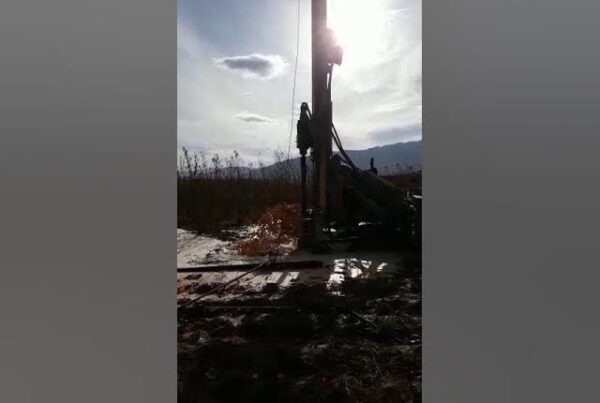
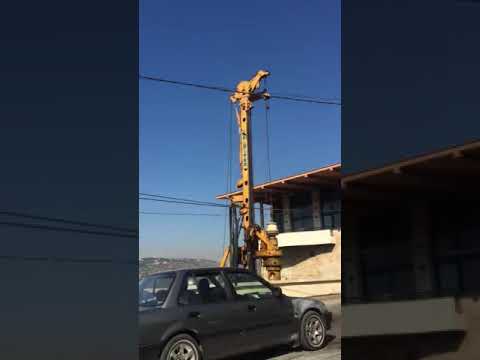
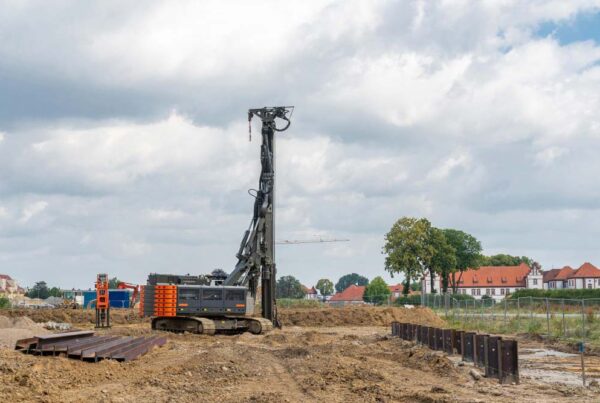
Ground anchors are commonly installed by drilling an inclined hole into the ground, placing a steel tendon or reinforcing element, grouting the required anchorage zone and connecting the anchor to the retaining wall.
Depending on the engineering design, the anchor may then be stressed to a specified load so that it actively supports the retaining system.
Why Are Ground Anchors Used in Deep Excavations?
As excavation becomes deeper, lateral earth pressures acting on the retaining wall generally increase. Nearby buildings, roads, utilities and construction loads can add further pressure to the support system.
Ground anchors provide additional restraint to the retaining wall by transferring part of these forces into suitable ground behind the excavation.
Main reasons for using ground anchors include:
- Supporting retaining walls during deep excavation
- Reducing excessive wall movement
- Providing lateral restraint to shoring systems
- Helping maintain excavation stability
- Supporting construction close to existing buildings
- Reducing the need for extensive internal bracing
- Maintaining more usable working space inside the excavation
- Supporting temporary or permanent retaining systems where designed accordingly
How Does a Ground Anchor Work?
A ground anchor works by transferring tensile force from the retaining structure into a stable zone of soil or rock behind the excavation.
The anchor typically includes a free length and a bonded length. The free length allows the anchor tendon to elongate during stressing, while the bonded length transfers the anchor force into the surrounding ground through grout and ground interaction.
A simplified ground-anchor system generally includes:
- Anchor head
- Bearing plate or connection
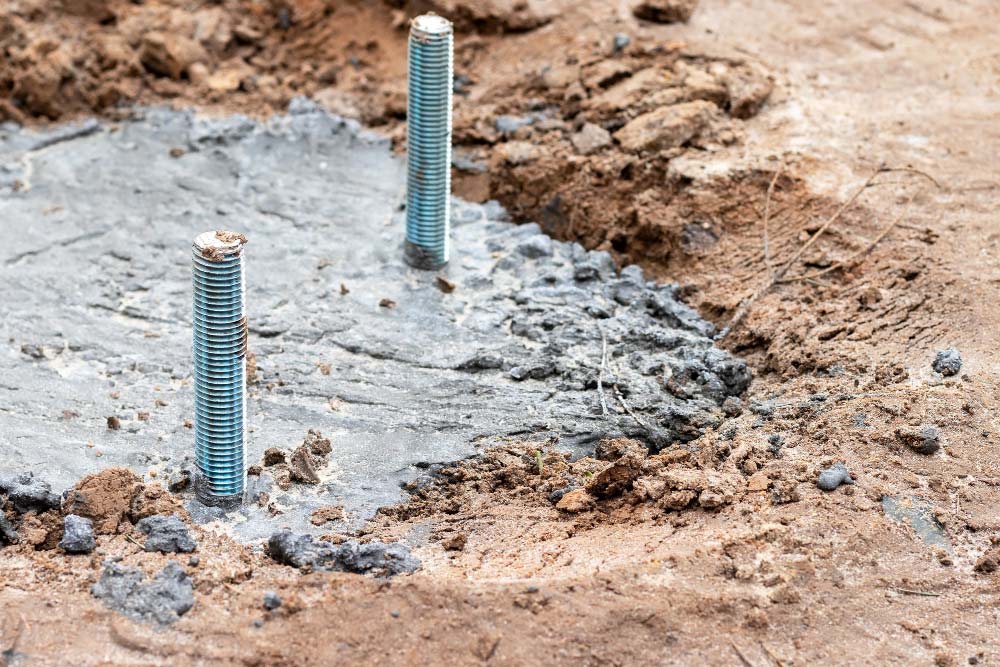
- Steel tendon or reinforcing element
- Free anchor length
- Bonded or fixed anchor length
- Cement grout
- Competent soil or rock surrounding the bonded zone
The exact configuration depends on the anchor design, ground conditions, required load and project specifications.
What Is the Difference Between a Ground Anchor and a Rock Anchor?
Ground anchors and rock anchors use similar principles, but the term usually reflects the material in which the anchorage develops its resistance.
Ground Anchors
Ground anchors may be installed in suitable soil, weathered material or rock depending on the site conditions and engineering design.
Rock Anchors
Rock anchors are specifically designed to transfer forces into competent rock formations. The bonded portion of the anchor is formed within the rock, where the required anchorage resistance can be developed.
Both systems can be used for excavation support, retaining structures and stabilization applications.
How Are Ground Anchors Installed?
Ground anchor installation requires controlled drilling, accurate positioning and coordination with the retaining wall and excavation sequence.
A typical installation process may include:
- Identifying the required anchor location and inclination
- Drilling the anchor hole through the retaining system and into the ground
- Advancing the borehole to the required depth
- Installing the anchor tendon
- Grouting the bonded anchor zone
- Allowing the grout to develop the required strength
- Connecting the anchor to the retaining wall
- Stress-testing or proof-testing the anchor where specified
- Locking off the anchor at the required design load
- Continuing excavation according to the planned construction sequence
The exact installation procedure depends on ground conditions, anchor type, design requirements and the equipment being used.
Why Are Ground Anchors Installed at an Angle?
Ground anchors are frequently drilled downward and away from the excavation so that their bonded zone reaches suitable ground beyond the active area of the retaining wall.
The inclination also needs to work around nearby foundations, underground services, property boundaries and geological conditions.
The anchor angle is therefore determined by engineering design rather than using one standard inclination for every project.
What Retaining Systems Can Use Ground Anchors?
Ground anchors can be integrated with several types of retaining and excavation-support systems.
Common applications include:
- Soldier pile walls
- Secant pile walls
- Retaining walls
- Shotcrete-supported excavation faces
- Anchored pile walls
- Slope-stabilization systems
- Infrastructure retaining structures
The retaining wall and anchor system need to be designed together so that loads can be transferred appropriately between the wall, anchors and surrounding ground.
Why Are Anchors Often Used With Soldier Pile Walls?
Soldier pile walls consist of vertical structural elements installed along the excavation perimeter, with support between the piles as excavation progresses.
For deeper excavations, the retaining piles may require additional lateral support. Ground anchors can provide this restraint by connecting the wall to stable ground behind the excavation.
This combination can provide an efficient excavation-support system while keeping much of the interior excavation area free from structural bracing.
Why Are Ground Anchors Used With Secant Pile Walls?
Secant pile walls create a relatively continuous retaining wall using overlapping bored piles.
Although secant piles can provide considerable stiffness, deep excavations may still require additional lateral restraint depending on excavation depth, wall height, ground conditions and surrounding loads.
Ground anchors can be installed through or connected to the secant wall to provide additional support as excavation progresses.
Ground Anchors vs Internal Bracing
Both ground anchors and internal bracing can support deep excavation walls, but they work in different ways.
Ground Anchors
- Extend outward behind the retaining wall
- Transfer loads into soil or rock outside the excavation
- Leave more working space inside the excavation
- Require suitable ground beyond the retaining wall
- May require permission where anchors extend beyond the project boundary
Internal Bracing
- Supports opposing retaining walls from inside the excavation
- Uses structural struts, walers or framing
- Does not require anchorage outside the site boundary
- Can occupy significant working space within the excavation
The appropriate system depends on site boundaries, construction sequence, ground conditions, excavation depth and project requirements.
What Is the Difference Between Ground Anchors and Soil Nails?
Ground anchors and soil nails are both installed by drilling into the ground, but they serve different structural functions.
Ground Anchors
- Are commonly actively stressed
- Provide direct restraint to a retaining structure
- Transfer tensile loads into a bonded anchorage zone
- Are often spaced farther apart than soil nails
- Are commonly combined with pile walls and other retaining structures
Soil Nails
- Are typically passive reinforcing elements
- Reinforce the existing soil mass
- Are generally installed at relatively close spacing
- Develop resistance as the reinforced ground tends to move
- Are commonly combined with reinforced shotcrete facing
The choice between soil nailing and ground anchoring depends on the type of excavation-support system and the overall engineering requirements.
Temporary vs Permanent Ground Anchors
Ground anchors may be designed for temporary or permanent use depending on the project.
Temporary Ground Anchors
Temporary anchors support excavation walls during construction until the permanent basement, slabs or other structural elements can provide the required support.
Permanent Ground Anchors
Permanent anchors remain part of the long-term structural system and require design measures appropriate for their intended service life, including suitable corrosion protection and long-term performance considerations.
The anchor classification and protection requirements should be determined according to the project design and applicable engineering standards.
Can Ground Anchors Be Used Near Existing Buildings?
Yes, but the presence of existing buildings requires careful investigation and coordination.
The anchor must avoid interfering with neighboring foundations and other underground structures. Its position, depth and inclination need to be considered against what exists behind the retaining wall.
Important considerations include:
- Depth of neighboring foundations
- Distance to adjacent buildings
- Anchor length and inclination
- Underground utilities
- Property boundaries
- Ground and rock conditions
- Allowable retaining-wall movement
Can Ground Anchors Extend Beyond the Property Boundary?
Ground anchors may need to extend behind the retaining wall far enough to develop their bonded length in stable soil or rock.
On constrained urban sites, this can mean that the proposed anchor alignment would extend beyond the property boundary.
Property rights, approvals and legal restrictions must therefore be reviewed before selecting an anchored retaining system. If external anchors cannot be installed, internal bracing or another excavation-support solution may need to be considered.
How Does Groundwater Affect Ground Anchoring?
Groundwater can affect drilling conditions, grouting, excavation stability and the wider retaining system.
Its influence should therefore be evaluated during both design and construction.
Groundwater-related considerations may include:
- Groundwater level
- Water inflow during drilling
- Ground permeability
- Grouting conditions
- Water pressure behind the retaining wall
- Need for construction dewatering
- Potential effects on surrounding ground and structures
For complex sites, ground anchoring, shoring and dewatering should be coordinated as one excavation-support strategy.
Are Ground Anchors Tested After Installation?
Anchor testing can be an important part of installation and verification. Depending on the design and specifications, anchors may undergo testing to assess their response under controlled loading before they are accepted as part of the support system.
Testing requirements vary according to the anchor type, design load, project specifications and applicable standards.
Testing can help assess:
- Anchor load response
- Movement under applied load
- Performance of the anchorage zone
- Behavior before final lock-off
What Determines Ground Anchor Length?
There is no standard anchor length suitable for every excavation.
The required length depends on excavation geometry, ground conditions and the location of suitable material where the bonded zone can develop the required resistance.
Design considerations include:
- Excavation depth
- Wall geometry
- Soil and rock profile
- Potential ground failure surfaces
- Required anchor load
- Nearby foundations
- Property boundaries
- Groundwater conditions
What Types of Projects Use Ground Anchors?
Ground anchors are used across many types of construction and civil-engineering projects.
Common applications include:
- Deep basement excavations
- Residential developments
- Commercial projects
- Urban excavation support
- Infrastructure projects
- Retaining structures
- Slope stabilization
- Excavations close to existing buildings
- Projects requiring anchored secant pile walls
- Anchored soldier pile walls
Ground Anchoring for Deep Excavations in Lebanon
Deep excavation projects in Lebanon can involve restricted property boundaries, neighboring structures, variable soil and rock formations, groundwater and difficult equipment access.
These conditions make it important to select an excavation-support system based on the specific site rather than relying on a standard solution.
Where the conditions allow, ground anchors can provide effective lateral support while preserving valuable working space inside the excavation.
Albitar Foundations provides ground anchoring and rock anchoring services in Lebanon and can coordinate these works with shoring, secant piles, soldier pile systems, shotcrete, excavation, dewatering and other specialist ground works.
What Should Be Evaluated Before Choosing Ground Anchors?
Ground anchors should be considered as part of the overall excavation-support design.
Important factors include:
- Excavation depth and geometry
- Soil and rock conditions
- Groundwater
- Retaining-wall type
- Required anchor loads
- Nearby buildings and foundations
- Property boundaries
- Underground services
- Drilling access
- Construction sequence
- Temporary or permanent support requirements
Frequently Asked Questions About Ground Anchors
What is a ground anchor in construction?
A ground anchor is a tension-resisting structural element installed into soil or rock and connected to a retaining wall or other structure. It transfers tensile forces into suitable ground to provide additional restraint and stability.
Why are ground anchors used in deep excavation?
Ground anchors are used to provide additional lateral support to excavation retaining walls. They help transfer loads away from the wall and can reduce movement while keeping the excavation interior relatively clear of structural bracing.
What is the difference between a ground anchor and a soil nail?
A ground anchor is commonly actively stressed and applies restraint directly to a retaining system. A soil nail is generally a passive reinforcing element that strengthens the soil mass and develops resistance as the ground tends to move.
Can ground anchors be installed in rock?
Yes. Anchors installed with their bonded zone in competent rock are commonly referred to as rock anchors. The drilling, grouting and anchor design are selected according to the rock conditions and required structural load.
Does Albitar Foundations provide ground anchoring services in Lebanon?
Yes. Albitar Foundations provides rock anchor and ground anchoring services in Lebanon for excavation support, retaining systems and ground-stabilization applications. Anchoring works can be coordinated with piling, shoring, shotcrete, dewatering and excavation according to project requirements.
Are Ground Anchors the Right Solution for Your Deep Excavation?
Ground anchors can be a highly effective way to support deep excavation walls where suitable soil or rock exists behind the retaining structure and site boundaries allow anchor installation.
They can be especially useful where maintaining clear working space inside the excavation is important, but their suitability depends on ground conditions, groundwater, neighboring foundations, property boundaries and the structural requirements of the retaining system.
The most appropriate solution may involve ground anchors alone or a coordinated combination of retaining piles, shotcrete, internal bracing, soil reinforcement and groundwater control.
Planning a Ground Anchoring or Deep Excavation Project in Lebanon?
Early coordination between the excavation, retaining wall, anchoring system and groundwater-control strategy can help reduce uncertainty before below-ground construction begins.
Contact Albitar Foundations to discuss ground anchors, rock anchors, shoring and specialist excavation-support solutions for your project in Lebanon.