
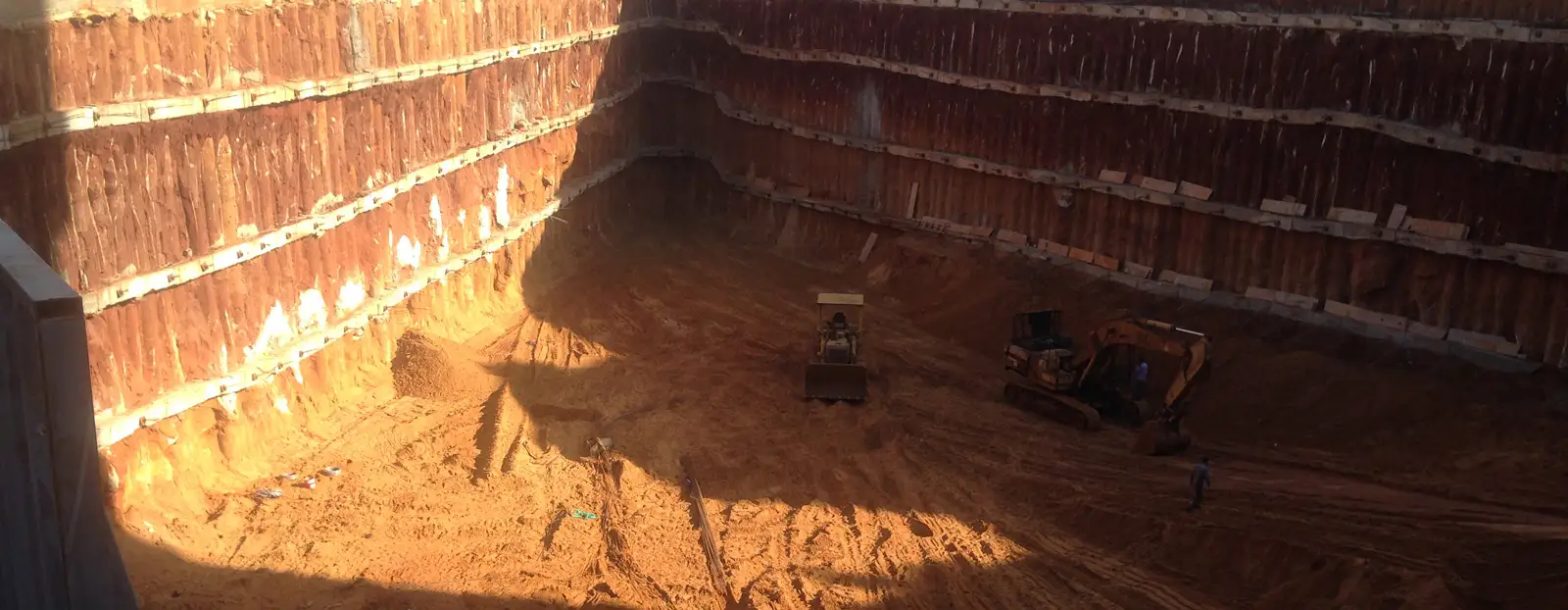
Micropiles & Underpinning
Strengthening Foundations Where Existing Support Is No Longer Enough
Settlement, weak ground, increased structural loads or nearby excavation can place existing foundations under stress. Albitar Foundations provides specialist underpinning and micropile solutions designed to transfer loads to more suitable ground while working around existing structures and restricted site conditions.
Foundation Strengthening
About the Service: Practical Solutions for Existing Foundations
Foundation repair and underpinning are used when an existing foundation requires additional support or when ground conditions are no longer providing the performance required. Depending on the project, solutions may involve micropiles, deep foundation elements or other strengthening measures designed around the existing structure and site constraints.
Common Foundation Challenges
When Underpinning May Be Needed:
When Existing Support Needs Reinforcement
Underpinning may be required when existing foundations no longer provide the support a structure needs or when changing site conditions introduce new risks. Settlement, weak soils, nearby excavation and increased structural loads can all create situations where additional foundation support should be considered.
Weak Underlying Soils
Additional support may be required where existing foundations bear on compressible or inadequate ground.
Foundation Settlement
Underpinning can help stabilize foundations or slabs affected by settlement.
Adjacent Excavations
Nearby excavation can influence ground movement and affect existing foundations.
Increased Structural Loads
Changes to a structure or its use may require additional foundation capacity.
Difficult Ground Conditions
Sinkholes, expansive soils or collapsible soils can require specialist foundation rehabilitation strategies.
Specialist Access & Experience
Why Choose Albitar:
Designed Around Existing Structures
Foundation strengthening is rarely carried out on an open, unrestricted site. Existing buildings, limited headroom, neighboring properties and confined access all influence the method that can realistically be used.
01 / Low-Headroom Capability
Equipment suited to locations where conventional drilling rigs cannot operate.
02 / Restricted-Access Solutions
Methods planned around tight working areas and existing structures.
03 / Ground-Engineering Experience
Experience across piles, micropiles, anchors, drilling and foundation systems.
04 / Practical Site Execution
Solutions considered against access, sequencing and the realities of working around an existing building.
A More Controlled Repair Strategy
What You Gain: Strengthening With Less Uncertainty
The objective is not simply to add more foundation elements. It is to develop a practical strengthening strategy that responds to the cause of the problem, the condition of the existing structure and the constraints of the site.
- Improved Foundation Support
Transfer loads toward more suitable bearing conditions where required. - Reduced Further Movement Risk
Help stabilize foundations affected by unsuitable ground or settlement. - Solutions for Constrained Sites
Work around restricted access, low headroom and existing construction. - Better Integration With Existing Structures
Plan strengthening works around the building rather than treating the foundation in isolation.
FAQs
Questions About Foundation Repair & Underpinning
Foundation problems can develop for different reasons, and the right response depends on the structure, ground conditions and site constraints. These answers cover common questions about settlement, underpinning, micropiles, restricted access and foundation strengthening.
What is foundation underpinning?
Underpinning is the process of strengthening or extending an existing foundation so that structural loads can be supported more effectively.
When is underpinning typically required?
It may be considered where foundations have settled, underlying soils are weak, structural loads have changed or nearby construction has affected ground conditions.
Can underpinning be carried out in restricted-access areas?
Yes. Depending on site conditions, low-headroom and restricted-access equipment can allow foundation strengthening work in areas where conventional rigs cannot operate.
How are micropiles used in underpinning?
Micropiles can provide deep foundation support where loads need to be transferred beyond weaker near-surface ground.
Can settled slabs or foundations be stabilized?
Depending on the cause and structural condition, specialist foundation rehabilitation measures may be used to stabilize affected foundations or slabs.
Does every foundation settlement problem require underpinning?
No. The cause of movement should be understood before selecting a repair strategy. Different ground and structural conditions can require different solutions.
Can nearby excavation affect an existing foundation?
Yes. Excavation can change surrounding ground conditions and, in some cases, contribute to movement that needs to be assessed and managed.
Start with the ground conditions
Planning a difficult excavation or foundation project?
Share the site constraints, project requirements and available geotechnical information. Albitar Foundations can review the challenge and help identify a technically suitable and financially practical way forward.
Albitar Foundations
Geotechnical Engineering
Shoring
Excavation
Lebanon